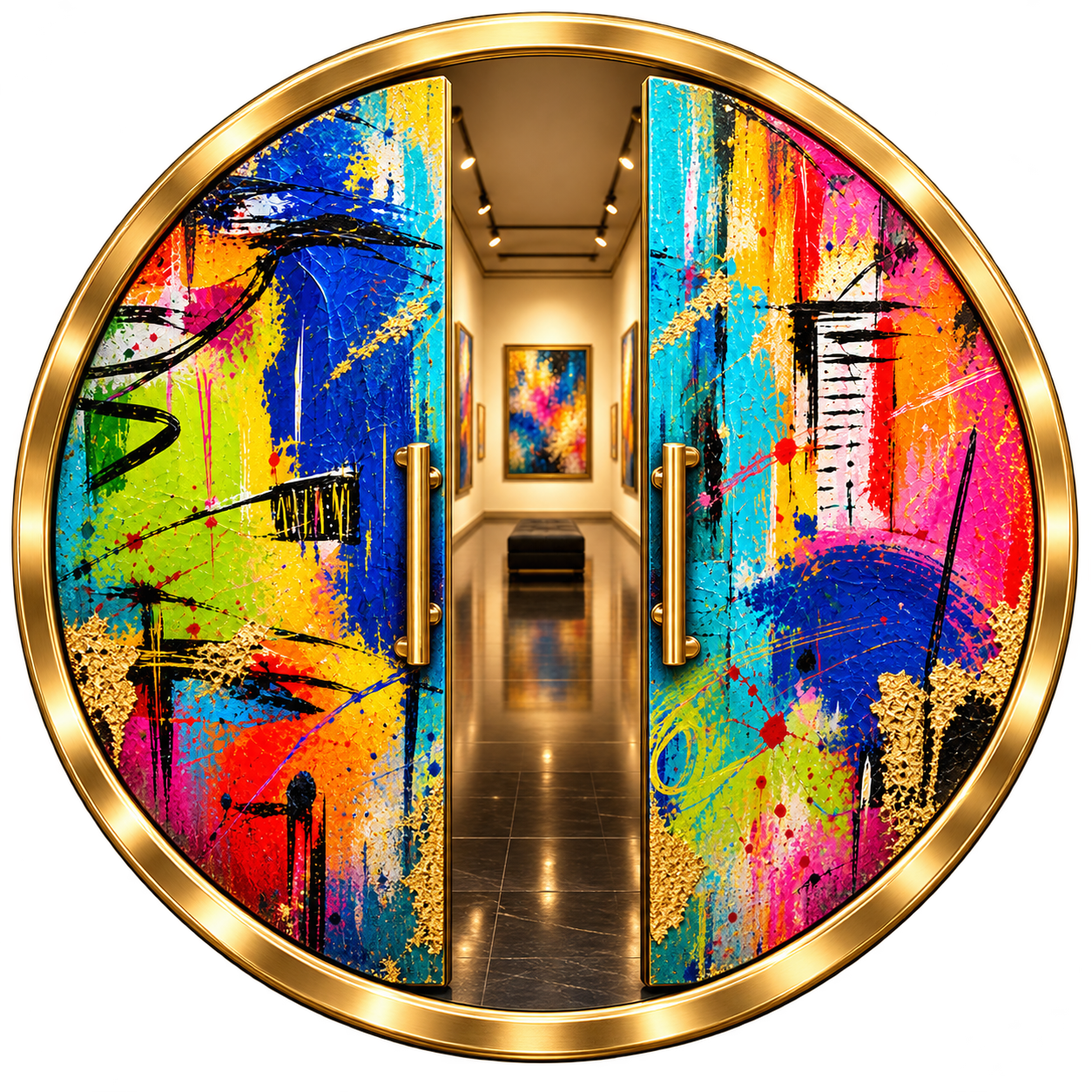

The most common mistake collectors make is buying a painting they love and then finding a wall for it. The better approach is the reverse: understand your wall first, then find the work that belongs there.
Scale: a painting should occupy 60 to 75 percent of the wall width it anchors. Smaller than that and it floats. Larger and it overwhelms. For a sofa wall, measure the sofa length and multiply by 0.65. That is your target width.
Light: natural north light is the most honest. South light is warm and shifts through the day. Artificial light should be warm-spectrum (2700K to 3000K) and angled at 30 degrees from the wall. Overhead recessed lighting pointed directly at a painting flattens it.
Proportion: the center of a painting should hang at eye level — approximately 57 to 60 inches from the floor to the center of the work. This is the standard used by every major museum in the world. It is not arbitrary.
Tall, narrow works like Ascension (78 x 31.5 in.) create vertical drama in corridors and stairwells. Wide landscape formats anchor dining rooms and living spaces. Square works are the most versatile — they work in almost any context.